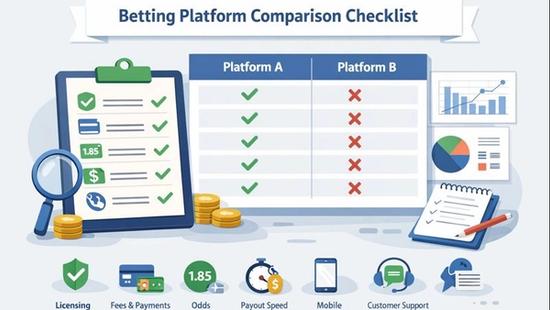
How to Choose a Betting Platform in 2026: A Practical Comparison Checklist
Published: 2/2/2026
Choosing a betting platform isn’t about picking “the best one overall.” It’s about picking the one that fits your country, your payment methods, the sports you follow, and how you actually place bets.
This checklist helps you compare platforms consistently—so you don’t get fooled by promos, shiny UI, or vague claims.
1) Start with licensing and availability
Before you compare odds or features, confirm the basics:
- Is the platform licensed in your region?
- Is it available to users in your country?
- Does it clearly display licensing details and terms?
If licensing info is hard to find, that’s already a signal.
2) Fees that quietly change your results
Two platforms can offer similar odds but feel totally different once fees and rules hit.
Look for:
- Deposit fees (especially for cards or specific wallets)
- Withdrawal fees and minimum withdrawal limits
- Currency conversion fees (huge if you’re not using a major currency)
- Inactivity fees
Tip: Make a simple table and list each platform’s real cost per deposit/withdrawal.
3) Odds format and transparency
Odds can be shown in different formats (decimal, fractional, American). What matters is:
- Do they update odds clearly and consistently?
- Is it easy to see market depth (not just a few headline bets)?
- Do they show rules for void bets, postponements, and settlements?
A platform that hides settlement rules creates surprises later.
4) Markets: more than “football + tennis”
If you mainly bet major leagues, most platforms will “work.” The difference shows up in:
- Lower leagues and regional competitions
- Player props / specials
- Live betting depth (how many markets stay active in-play)
- Esports (if relevant)
Pick the platform that matches the sports you actually bet, not what looks impressive on a homepage.
5) Payout speed and proof
This is where user experience becomes real.
Check:
- Typical withdrawal time by method (card vs bank vs wallet)
- Verification requirements (KYC)
- Whether delays happen only for certain methods/amounts
- Support responsiveness during withdrawals
A “fast withdrawals” claim is meaningless without details.
6) Limits, restrictions, and edge cases
Even legit platforms can have constraints that matter:
- Minimum bet size
- Maximum payout
- Market limits on niche leagues
- Restrictions on promotions (wagering requirements)
If you plan to bet regularly, limits become more important than welcome offers.
7) Mobile UX and live betting usability
A platform can be “feature-rich” and still painful to use.
Compare:
- Search (can you find markets fast?)
- Speed (pages load quickly, especially live)
- Bet slip clarity
- Cash-out visibility (if you use it)
- Errors / “price changed” frequency
8) Support quality (the underrated factor)
You won’t care about support until you really need it.
A quick test:
- Ask support a specific question (fees, verification, settlement rule)
- See response time + clarity
- Check available channels (chat/email/phone)
Common traps to avoid
- Choosing based on promos only (promos expire; fees and limits stay)
- Assuming “bigger brand = better for your country”
- Not checking currency conversion costs
- Ignoring settlement rules
A simple scoring method you can use
Rate each category 1–5:
- Licensing & availability
- Fees & payments
- Odds & transparency
- Market coverage
- Withdrawals & verification
- Limits & restrictions
- UX & performance
- Support
Then total the score. It’s not perfect—but it forces consistent comparison.
FAQ
How do I compare platforms fairly?
Use the same checklist and test the same sports/markets across all platforms (especially live betting markets if you use them).
What matters most for casual bettors?
Fees + withdrawals + usability. Odds differences are often smaller than people expect for casual volume.
What matters most for frequent bettors?
Limits, market depth, and consistent settlement rules.
Final note
PlatformBets exists to help you compare platforms and features more clearly—not to act as a sportsbook. Always review a platform’s terms and local rules before using it.